The Mysterious Significance and Cultural Impact of the Number Six Six Six Across History and Society
Introduction: The Enigmatic Nature of 666
The number 666 has fascinated, terrified, and intrigued humanity for centuries. Often associated with superstition, religion, and popular culture, 666 is more than just a number. Its mysterious aura and cultural significance have permeated various aspects of human society, provoking a complex blend of fear, curiosity, and symbolism. This article explores the historical roots, religious connotations, and widespread societal impact of this infamous number, uncovering the layers of meaning that have evolved through time.

Historical Background of the Number 666
The origins of 666 as a significant number can be traced back to ancient times, long before it became infamous in modern culture. Numerology, the study of numbers and their mystical significance, was prevalent in many ancient civilizations such as the Babylonians, Greeks, and Romans. The practice of assigning specific values and meanings to numbers was a common way of interpreting divine messages or understanding the universe.
However, 666 gained particular notoriety from its appearance in the Christian Bible’s New Testament, specifically in the Book of Revelation. Within this apocalyptic text, 666 is described as the "number of the beast," a symbol closely linked to the Antichrist and ultimate evil. This biblical association became the foundation for much of the fear and superstition that surrounds the number in Western culture.
Numerology and Symbolism of Six and 666
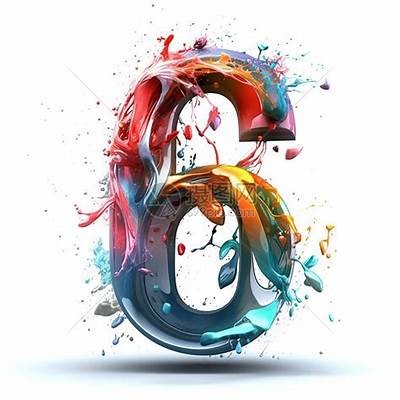
In numerology, the number six individually represents harmony, balance, and responsibility. It is often seen as a nurturing number, linked with domesticity and care. However, when tripled to form 666, the symbolism becomes more complex and layered. The repetition intensifies the number's significance, often interpreted as an exaggeration or distortion of the qualities attributed to six.

Some scholars argue that 666 symbolizes imperfection or incompleteness, falling short of the divine perfection represented by the number seven. Thus, 666 can be interpreted as the ultimate symbol of imperfection, human corruption, or evil. This interpretation aligns with its biblical representation but also extends into broader esoteric and mystical beliefs.
Religious Interpretations and Controversies
Within Christianity, 666 is widely regarded as the “Mark of the Beast,” a prophetic number foretelling the rise of malevolent forces in the end times. The Book of Revelation depicts it as a means to identify followers of the Antichrist, causing immense fear and speculation about its meaning and application. Various attempts have been made throughout history to decode the number, linking it to historical figures, political entities, and spiritual concepts.
Beyond Christianity, 666 holds different connotations. In Judaism, the number sometimes appears but lacks the dark associations found in Christian theology. Islamic traditions do not emphasize 666 specifically, although numerology exists in different cultural forms. The religious significance of 666 often depends heavily on interpretive frameworks and cultural contexts, resulting in a wide variety of understandings.
The Number 666 in Popular Culture
Popular culture has amplified the mystique of 666, intertwining it with horror, conspiracy theories, and superstition. It appears frequently in literature, films, music, and art, usually as a symbol of evil or the supernatural. Horror movies starring the “Mark of the Beast” trope have cemented 666’s image as a harbinger of doom and chaos in the collective imagination.
Music genres such as heavy metal often incorporate 666 symbolically, both to shock audiences and to explore darker themes. Controversies over alleged subliminal messages or satanic references abound, fueling media fascination with the number. This cultural fascination underscores how deeply embedded 666 is in the fabric of storytelling and psychological symbolism in modern society.
Psychological Effects and Social Responses to 666
The fear or anxiety elicited by 666 is a classic example of how numbers can carry powerful psychological effects. Known as hexakosioihexekontahexaphobia, the fear of 666 has led some individuals and groups to avoid the number altogether, evident in choices such as skipping room numbers, phone lines, or addresses containing 666.
This phobia highlights the potent influence of cultural narratives and religious teachings on human behavior. Conversely, some people have embraced 666 ironically or symbolically, using it to challenge norms or express rebellion against mainstream beliefs. These divergent social responses further illustrate the complex role of the number in shaping identity and community affiliation.
Interpretations in Esoteric and Occult Traditions
Beyond mainstream religion and popular culture, esoteric and occult traditions offer unique perspectives on the meaning of 666. Some occultists regard it as a number of transformation, symbolic of personal enlightenment achieved through confronting one’s shadow self or engaging with hidden knowledge.
Magicians, alchemists, and mystics have interpreted 666 as a doorway to higher wisdom, where the “beast” is not evil but a metaphor for latent potential awaiting harnessing. This reframing challenges conventional negative stereotypes and reveals the multifaceted nature of symbolic numerology in spiritual practice.
The Global Cultural Impact of 666
The influence of 666 extends beyond Western traditions, affecting global culture in various ways. In Asia, while 666 does not hold the same religious or apocalyptic weight, it is sometimes viewed positively in numerology, associated with good fortune and smooth progress. This contrast highlights the culturally relative nature of the number’s symbolism.
In the modern digital age, 666 appears ubiquitously—as in social media usernames, license plates, and even product design—demonstrating both its commercial appeal and enduring intrigue. Its presence in memes and internet culture often has an ironic or humorous tone, indicating a shift in how 666 is perceived and engaged with among younger generations worldwide.
Conclusion: The Enduring Mystery of 666
Throughout history and across cultures, the number 666 has maintained a powerful, enigmatic presence. From its biblical roots to its role in popular culture and psychological impact, 666 embodies a complex symbol that adapts to the changing contexts of human society. It represents fear and fascination, evil and transformation, superstition and rebellion. Understanding 666 means delving into layers of history, religion, psychology, and symbolism, revealing as much about human nature as about the number itself.
As society continues to evolve and reinterpret symbols, the story of 666 is far from over. Its role as a cultural touchstone exemplifies how numbers transcend pure mathematics, taking on meanings that shape beliefs, behaviors, and collective imagination across generations and cultures.